
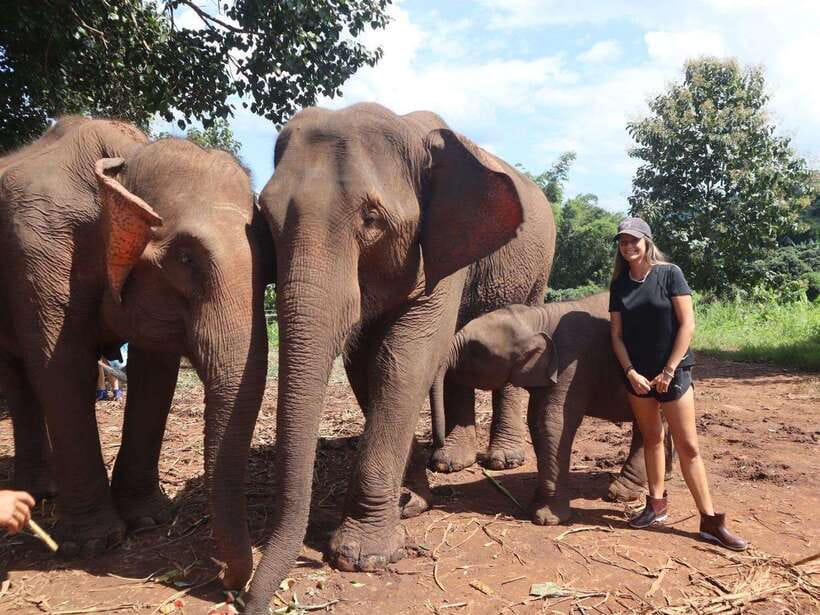
REVIEW · CHIANG MAI PROVINCE, THAILAND
Chiang Mai: Elephant Sanctuary & Waterfall Group Tour
Elephants, jungle, and a cool mountain waterfall make a fine Chiang Mai day. This seven-hour outing combines time at Pon Elephant Thailand with a short forest hike to Mae Wang Waterfall, giving you more than a quick animal encounter. I especially like the no-riding policy and the chance to watch elephants forage, feed them, and cool them in the river. I also like that lunch, fruit, drinks, transport, and elephant food are included.
The main drawback is the long road journey. You spend about 80 minutes each way in a van, and the day includes walking on uneven, sometimes wet ground. The waterfall may also be unsafe for swimming after heavy rain, so you need to accept that the schedule can change for safety.
Key points at a glance
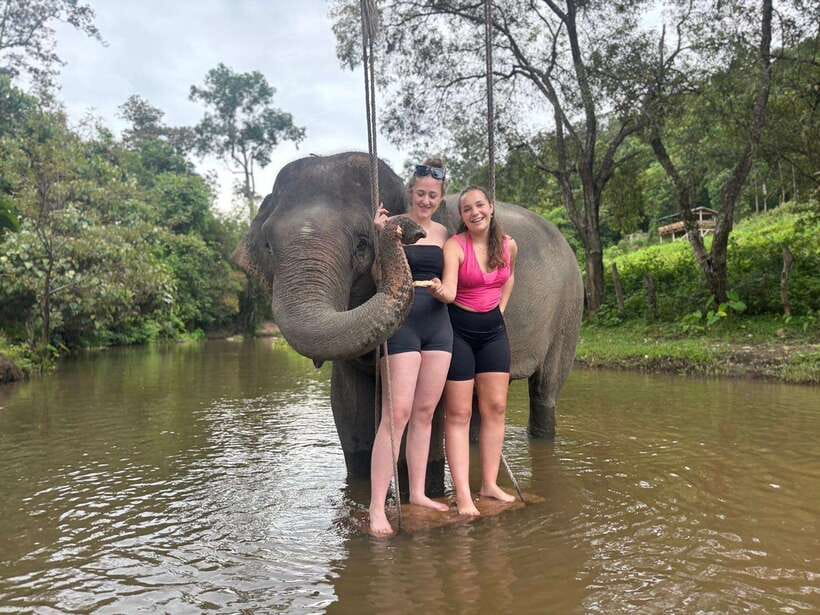
- Elephant care without riding: Elephants are not forced to perform, and riding is prohibited.
- Three hours at Pon Elephant Thailand: Feed, touch, observe, and walk near rescued elephants under staff guidance.
- River bathing: You may help cool the elephants in their river home, one of the most hands-on parts of the day.
- Mae Wang mountain water: A one-hour forest walk leads to a waterfall linked to Doi Inthanon.
- Good value at $50: Transport, an English-speaking guide, lunch, drinking water, and elephant food are included.
- Bring proper shoes: Sports shoes or trainers are useful for the forest, while sandals help around wet areas.
Why this tour works as a Chiang Mai day trip
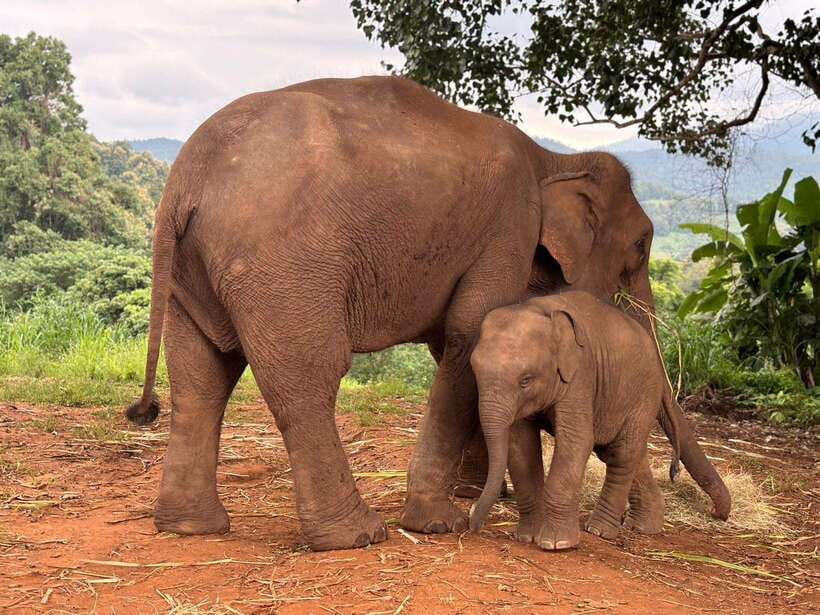
Chiang Mai is famous for temples and northern Thai food, but the province also gives you easy access to wooded mountain country. This tour heads southwest from the city toward Mae Wang, passing villages, farms, rice fields, and Buddhist temples along the way.
I like the mix. You get a close look at rescued Asian elephants, then leave the animal area for a short nature walk and a waterfall. It feels more rounded than a sanctuary visit that keeps you in one fenced compound all day.
The price is $50 per person. For seven hours, that is a fair package price, especially since city-center hotel transfers, an English guide, lunch, water, and food for the elephants are included. You are paying for transport and staff time as much as for the activities, which matters in a rural area roughly 80 minutes from Chiang Mai.
The tradeoff is time. The round-trip drive can take about two hours and 40 minutes, depending on traffic and the exact pickup arrangements. If you want a very relaxed morning with no road time, this is not the right outing. If you want several experiences in one day, it earns its place.
A few more waterfall trips around Chiang Mai worth a look
- Chiang Mai: Elephant Sanctuary, Waterfall & Bamboo Rafting
★ 4.9 · 9,160 reviews - Chiang Mai: Elephant Sanctuary, Long Neck & Sticky Waterfall
★ 4.9 · 2,262 reviews - Doi Inthanon Waterfall and Royal Project Chiang Mai
★ 5.0 · 1,735 reviews
The 80-minute drive into Mae Wang
Pickup is available from hotels in Chiang Mai city center, or you can meet the guide at the Pon Elephant Thailand office in town. If you choose hotel pickup, wait in the lobby 10 minutes before the confirmed time.
The ride heads southwest in a comfortable vehicle. The scenery changes gradually from city streets to local villages, farms, rice fields, temples, and mountain country. That drive is part of the day’s appeal, but bring water, sunscreen, and perhaps motion-sickness medicine if winding roads bother you.
The schedule lists around 80 minutes each way. Exact timing can shift with traffic, weather, and the condition of the waterfall. The operation has also adjusted plans when a waterfall was unavailable, using another nearby waterfall instead. That flexibility is useful, though it means you should not treat every time on the schedule as fixed.
Three hours with rescued elephants at Pon Elephant Thailand
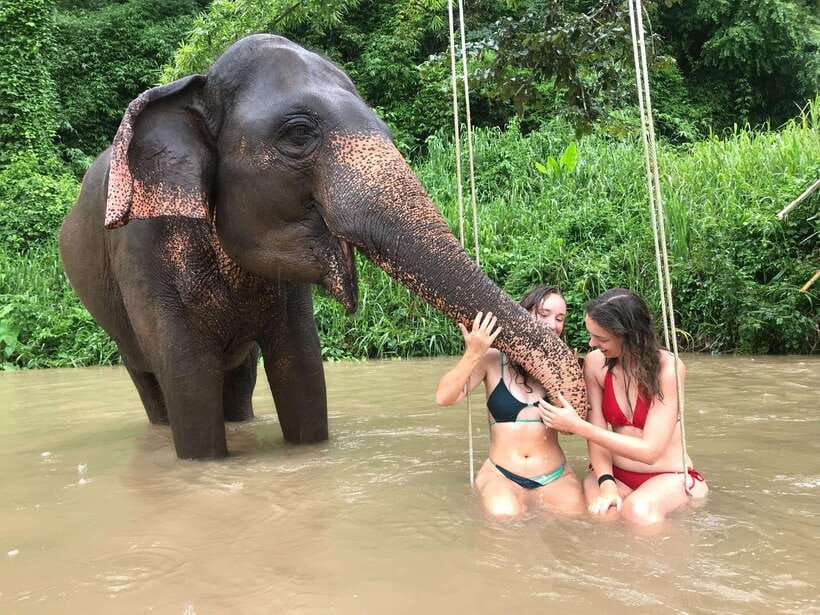
At the sanctuary, your English-speaking guide begins with a briefing about Asian and African elephants, the sanctuary’s background, and the animals in its care. You also learn how to prepare healthy snacks before feeding the elephants.
The food is not just a small extra. Feeding gives you a safe, simple way to approach the animals while learning how staff manage contact. The local saying, no food, no friend, captures the practical side of the activity. Elephants are large, powerful animals, so listening to instructions matters.
You may feed, touch, and walk near the elephants. The visit also gives you time to watch them forage and see elephant families interact. That observational part is important. A responsible sanctuary should not turn every minute into a photo opportunity, and here the stated policy is that elephants are not forced to perform activities.
The sanctuary also prohibits elephant riding. That will matter to anyone trying to avoid entertainment built around animal control. The information provided describes elephants rescued from labor and circus settings, with care, food, and medicine supplied at the sanctuary. You can ask the guide about individual elephants and their pasts, though the depth of explanation may vary by guide and group.
Several guides receive especially warm praise for their care and personal approach. Beer is often described as attentive, organized, and good at taking photos. Aamm is praised for humor and patience, while Yaya is noted for explaining elephant history, local plants, and the animals’ different personalities. Guides named Nop, Nana, Dew, Amy, Ronnie, Lek, Oum, Air, and Mimi are also singled out for friendliness, clear explanations, or careful group management.
That variety tells you something useful: the guide is a major part of the experience. English ability may vary slightly, but the overall approach is personal and involved. One guide may focus on elephant behavior, another on local culture or Buddhism. Do not expect a formal lecture from a wildlife scientist. Expect practical explanations from someone helping you interact safely and respectfully.
The river bathing session
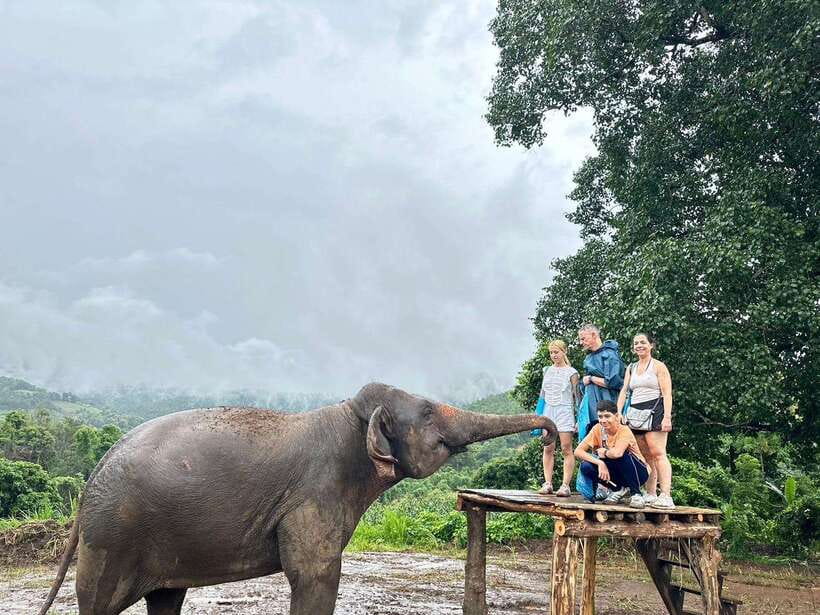
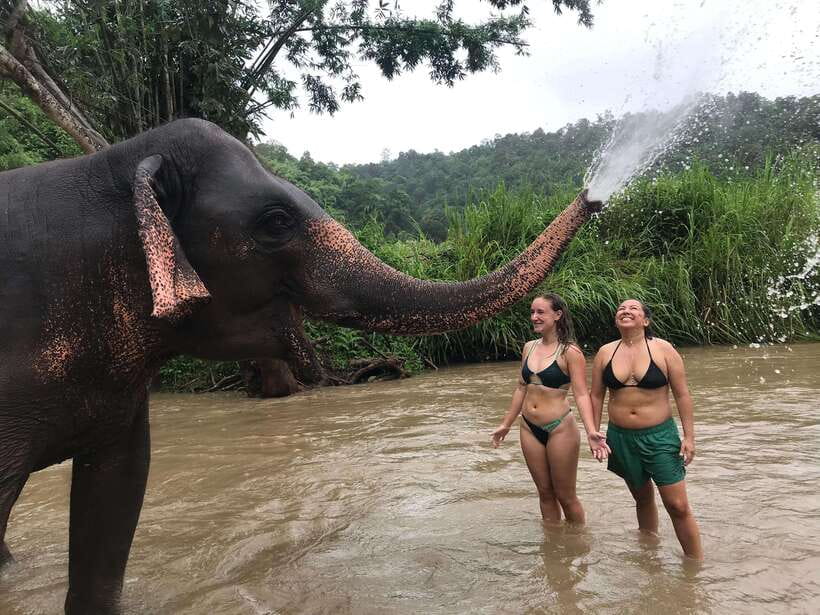
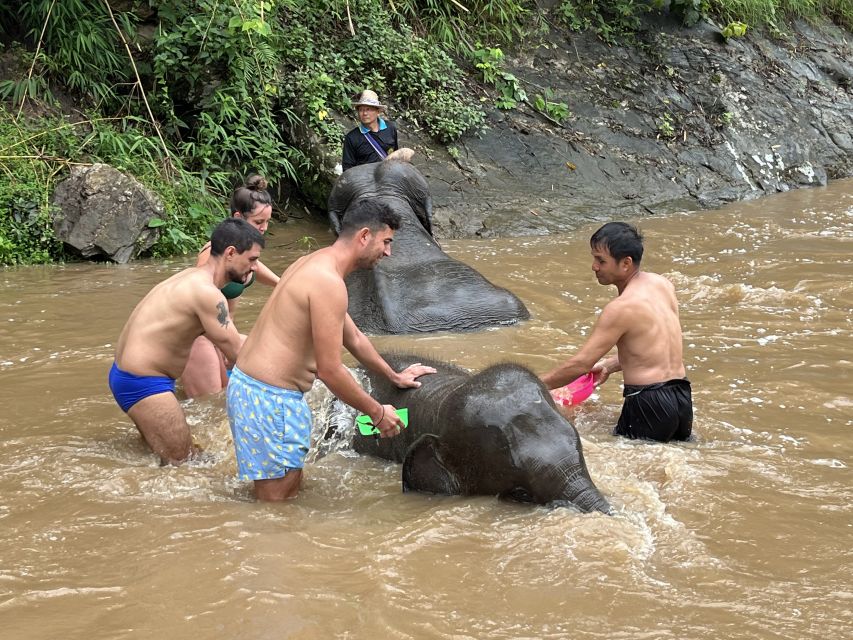
After feeding and walking with the elephants, the group heads to the river. Bathing or cooling the elephants is usually the most physical part of the sanctuary visit, and you may get wet and muddy.
You should not think of this as a performance where the elephants must obey a set routine. The stated policy is that the animals are not forced to do activities. The best moments come when the elephants choose to linger, forage, or enter the water naturally.
Bring swimwear, a towel, and a full change of clothes. The supplied information does not include towels, so pack your own. Sandals or flip-flops are useful beside the river, but several people found trainers better for the muddy and uneven sections before and after the water activity.
The river setting also gives you a chance to cool down in northern Thailand’s heat. Staff guide the interaction, and the elephants’ calm behavior is repeatedly described as a positive feature. Still, stay alert. Calm does not mean harmless, and you should follow instructions about where to stand, how to offer food, and when to move away.
After the river session, you can shower and collect your belongings. This is one reason the change of clothes matters. You may finish the elephant portion hot, damp, and dirty, which is not a problem if you have planned for it.
Same trip, a different kind of day out:
- Chiang Mai: Sticky Waterfall & Angel Waterfall Park Day Tour
★ 4.8 · 1,371 reviews - Chiang Mai: Bua Thong Sticky Waterfall & Huge Cave & Buffet
★ 4.8 · 1,049 reviews - Chiang Mai Elephant Sanctuary, Bamboo Rafting and Waterfall Tour
★ 5.0 · 870 reviews - Chiang Mai: Doi Inthanon, Waterfalls, & Tribal Villages Tour
★ 4.2 · 484 reviews
Thai lunch, fruit, and local desserts
Lunch is included and is served after the elephant activities. The meal is described as a traditional Thai lunch with seasonal fruit and Thai desserts, with one account noting hot food served in tiffin tins.
This is a welcome pause after several hours outside. It also adds value to the $50 price, since you do not need to arrange a separate meal in a rural area. The food is local rather than a generic boxed snack, and several accounts describe it as tasty.
Do not expect a restaurant-style lunch with an extensive menu. The focus is a simple, filling meal prepared for the group. If you have allergies, dietary restrictions, or medical needs, clarify them when booking rather than assuming a replacement meal is available.
Drinking water is included. Bring cash for personal purchases, but the main food and water needs are covered.
Hiking to Mae Wang Waterfall
After leaving Pon Elephant Thailand, the group takes a short hike through the forest to Mae Wang Waterfall. The waterfall is associated with water flowing from the Doi Inthanon mountain area, and the walk gives the day a welcome change of pace.
The visit is scheduled for about one hour. You can expect a nature walk rather than a demanding full-day trek, but the ground may be uneven, slippery, or muddy. Sports shoes are the sensible choice. Hiking pants are also listed among the recommended items.
Swimming may be possible in suitable conditions, but it is not guaranteed. Heavy rain can make the water unsafe, so the guide may limit or cancel swimming. This is a practical safety rule, not a flaw in the tour. Pack a swimsuit, but treat a swim as a bonus.
The waterfall stop is especially good for cooling off after the elephant visit. It also gives you a chance to take photos without crowding around the animals. Guides may help with pictures, which is useful if you are traveling alone or do not want to hand your phone to a stranger.
The walk can be harder for anyone with low fitness, mobility limits, vertigo, recent surgery, back problems, or heart and respiratory conditions. The tour is not suitable for wheelchair users, and the stated restrictions also include pregnancy, epilepsy, high blood pressure, animal allergies, insect allergies, and people over 70. These rules are broad, so ask the operator before booking if your situation is not clear.
What the tour gets right about elephant welfare
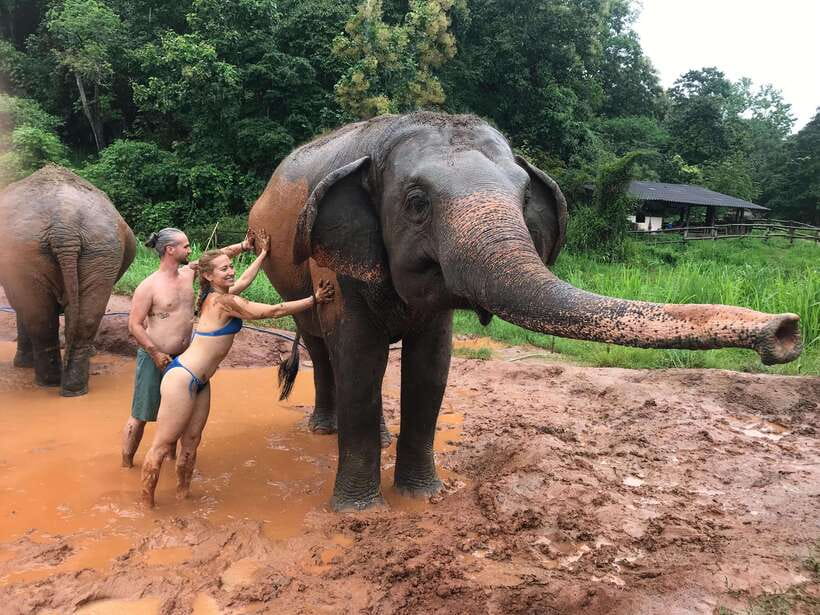
The strongest part of the experience is its stated approach to animal care. There is no elephant riding, and elephants are not forced to perform. You see them eating, walking, interacting, and bathing rather than posing for a staged show.
The sanctuary describes its animals as rescued from labor and circus work. Staff speak about their histories, personalities, medicine, and care. That personal attention is more reassuring than a basic photo stop, though you should still make your own judgment about any animal attraction.
Look for the practical signs during your visit: whether elephants can move away from people, whether handlers allow them space, and whether activities stop when an elephant is unwilling. The supplied tour information supports an enhanced-welfare model, but no short visit can answer every question about a sanctuary’s long-term operations.
I like that the activity centers on feeding, observing, and walking rather than tricks. The river bathing is more debatable in any elephant program, so pay attention to how much choice the animals have. If an elephant wanders off, the right response is to let it go, not demand a better photo.
Who will enjoy this seven-hour outing?
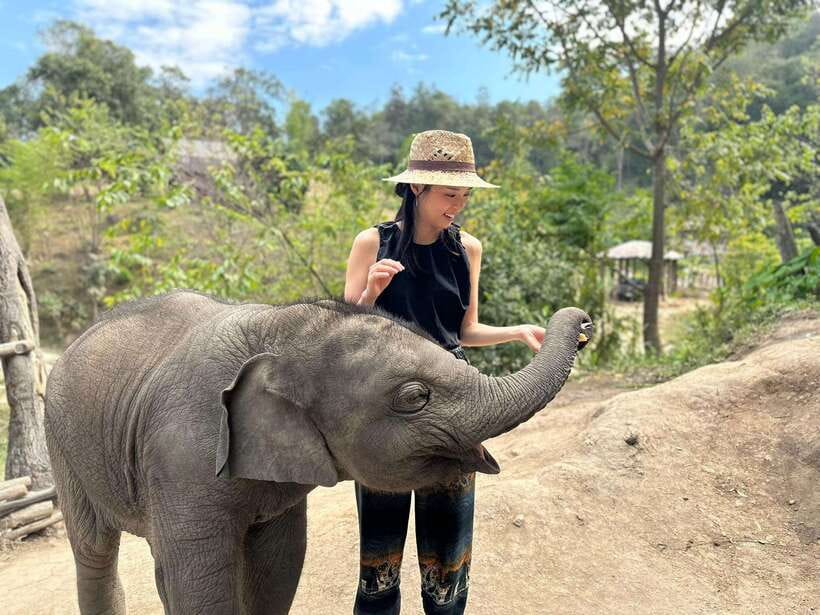
This suits you if you want close contact with elephants but do not want riding or circus-style performances. It also works well if you prefer a full day with several parts: road scenery, animal care, lunch, forest walking, and a waterfall.
Families with older children can enjoy it. The stated minimum age is two, but the general suitability notes exclude very young children under two. One family with children aged four and seven found the day manageable, while another account describes a three-year-old warming up after an uncertain start.
You should have a reasonable level of fitness. You will spend time standing, walking, handling food, and moving around wet ground. This is not a good choice if you need step-free access, tire easily, dislike insects, or are uncomfortable with water and mud.
Solo visitors can book, but the group format may affect the atmosphere. Group ages can vary widely. One solo participant wished for a group closer to their own age, so keep that in mind if social fit matters to you.
What to pack for comfort
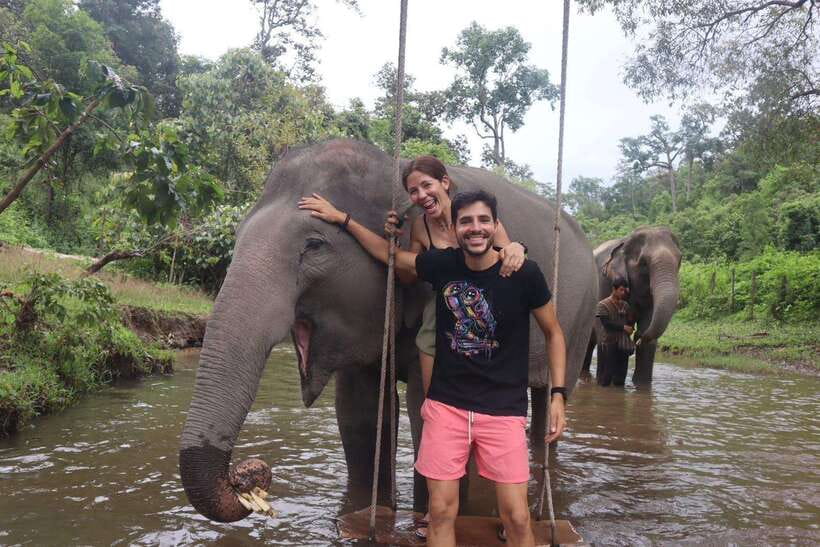
Pack lightly, but pack the right things:
- Swimsuit or swimwear
- Towel and a complete change of clothes
- Trainers or sports shoes for the forest
- Sandals for the river and waterfall
- Sunscreen and insect repellent
- Camera
- Personal medicine
- Cash
- Hiking pants
- Passport number for insurance details
A waterproof bag for your phone and dry clothes would be sensible, although it is not specifically listed as an included item. Keep valuables secure while bathing.
Wear clothing that can handle dirt. The day is active, and the river portion may leave you wetter than expected.
Booking, cancellation, and practical details
The tour lasts about seven hours and is offered with an English-speaking live guide. Hotel transfers cover Chiang Mai city center only. If your accommodation is outside that area, use the town office meeting point or confirm the pickup arrangement before paying.
You can cancel up to 24 hours in advance for a full refund, and reserve now while paying later. Availability depends on the chosen date and starting time.
The activity has a 4.9 rating from 5,780 reviews, and transport receives a 91 percent perfect score. Those figures suggest a well-liked operation, but the useful takeaway is more specific: guides, transport, elephant care, lunch, and the combination of activities are the parts most consistently praised.
Is the Pon Elephant and Mae Wang Waterfall tour worth booking?
I would book this if you want an ethical-minded elephant encounter with a nature stop, and you are comfortable with a long van ride and a wet, active day. The $50 price is strong value because it includes city-center transfers, guiding, lunch, water, and elephant food.
I would skip it if you want a quiet, private visit, dislike group schedules, or cannot manage uneven paths and river activities. Also avoid booking on the assumption that swimming at the waterfall is guaranteed.
For most fit visitors who want more than a quick elephant photo, this is a well-balanced Chiang Mai day. Bring trainers, a towel, dry clothes, and an open mind about the weather. Let the elephants set the pace, and the day should feel both enjoyable and respectful.
FAQ
How long does the Chiang Mai elephant and waterfall tour last?
The tour lasts about seven hours, including travel to and from Chiang Mai, time at Pon Elephant Thailand, lunch, and the Mae Wang Waterfall visit.
How far is the sanctuary from Chiang Mai?
The drive takes about 80 minutes each way by van, depending on traffic and road conditions.
Is hotel pickup included?
Hotel transfers are included for hotels in Chiang Mai city center. Pickup is optional, and you can also meet the guide at the Pon Elephant Thailand office in town.
Can I ride the elephants?
No. Elephant riding is prohibited on this tour.
Are the elephants forced to perform?
The tour states that elephants are not forced to perform activities. You are encouraged to observe, feed, touch, and walk near them while following staff instructions.
Can I feed and bathe the elephants?
Yes. Food for feeding the elephants is included, and the program includes a river session where you may help cool or bathe them.
Is lunch included?
Yes. Traditional Thai lunch, drinking water, seasonal fruit, and Thai desserts are included.
Can I swim at Mae Wang Waterfall?
Swimming may be possible, but it is not guaranteed. Heavy rain can make the waterfall unsafe, and the guide may change the plan for safety.
What should I bring?
Bring swimwear, a towel, a change of clothes, sandals, sports shoes, sunscreen, insect repellent, a camera, cash, hiking pants, and any personal medicine.
Who should avoid this tour?
The tour is not suitable for children under two, pregnant women, wheelchair users, people with mobility, heart, back, respiratory, or seizure conditions, people with recent surgery, low fitness, certain allergies, vertigo, motion sickness, high blood pressure, visual or hearing impairment, or anyone over 70.
Just added around Chiang Mai
- Waterfall Wanderer Doi Inthanon Hiking Tour★ 5.0 · 15 reviews
- Trek to a Jungle Waterfall★ 5.0 · 14 reviews
- Private tour Chiang Dao cave ,Temples,Sticky waterfall★ 5.0 · 14 reviews
- Sticky Waterfall Cycling Tour★ 5.0 · 68 reviews
- Sticky Waterfalls Private Half Day Fun Escapades★ 4.5 · 8 reviews
- Private Doi Suthep Temple Handicraft Center and Sticky Waterfall★ 5.0 · 9 reviews
- Private tour] Perfect day! Sticky waterfall + ChiangDao Cave + Wat BandenTemple★ 4.5 · 6 reviews
- Sticky Waterfall Chiang Mai and Mae Ngat Boat Tour★ 5.0 · 19 reviews
Chiang Mai Waterfall Tours, compared.
Elephant Sanctuary, Waterfall & Bamboo Rafting
Read our review →
Elephant Sanctuary, Long Neck & Sticky Waterfall
Read our review →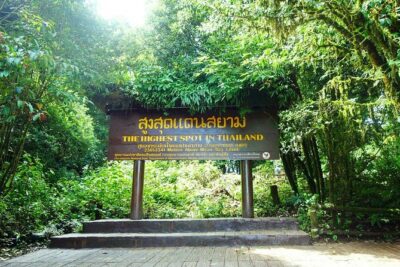
Doi Inthanon Waterfall and Royal Project Chiang Mai
Read our review →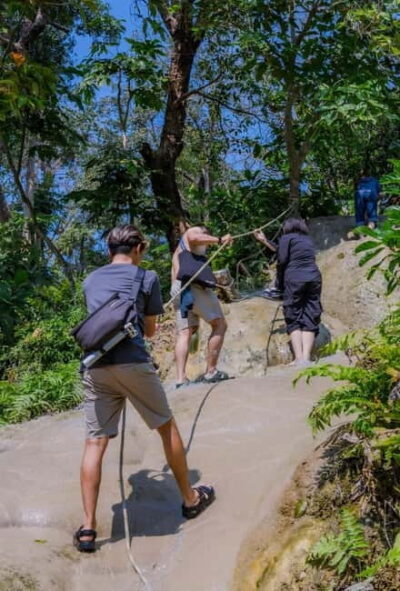
Sticky Waterfall & Angel Waterfall Park Day Tour
Read our review →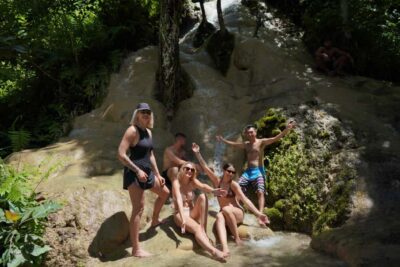
Bua Thong Sticky Waterfall & Huge Cave & Buffet
Read our review →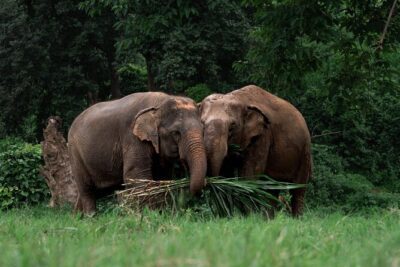
Chiang Mai Elephant Sanctuary, Bamboo Rafting and Waterfall Tour
Read our review →
Doi Inthanon, Waterfalls, & Tribal Villages Tour
Read our review →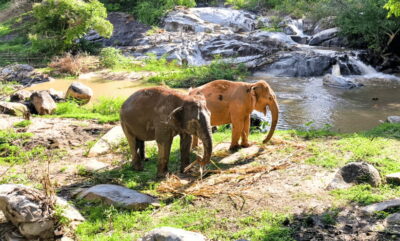
Ethical Half Day Elephant Sanctuary & Waterfall
Read our review →Browse the lists this tour appears in