
REVIEW · BALI, INDONESIA
Taman Beji Griya Waterfall: Holy Bathing/Soul Retreat Ritual
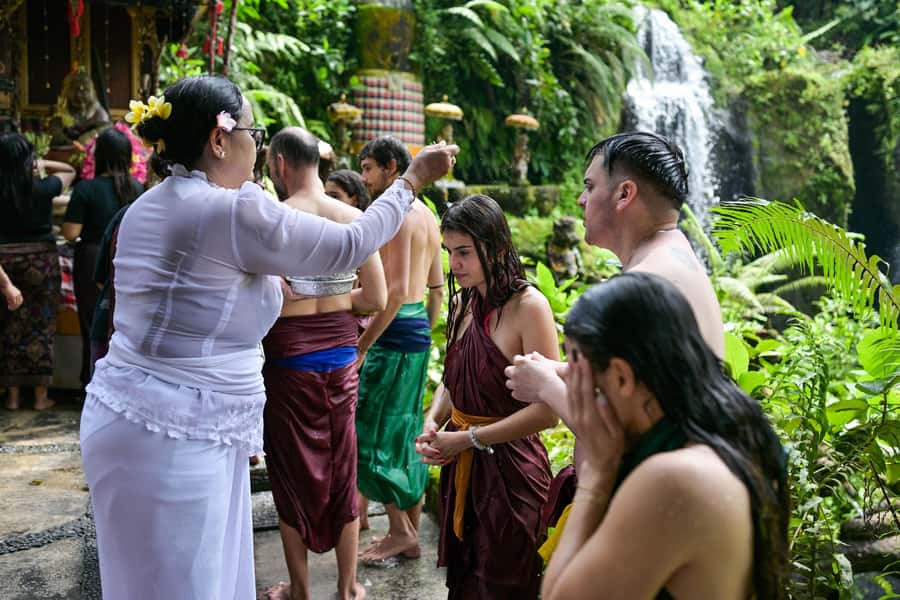
Leave the noise behind for a while. At Taman Beji Griya, you enter a sacred waterfall site for a traditional Balinese Melukat purification ritual, where prayer, offerings, and holy-water bathing create a quiet break from ordinary sightseeing. I like the beautiful forest setting and the way the ceremony gives you a real introduction to Balinese Hindu customs, rather than just a quick photo stop.
I also like the calm, helpful staff. Guides such as Bayu, Dodo, Nanda, and Putu Adi have helped participants understand each stage, while drivers including Wayan Sue, Udi, Roger, and Jhon have added cultural background along the way. The main drawback is that the experience can feel organized for a steady flow of people, especially at busy times, and the $29 starting price is higher than many simple Bali excursions.
What makes this experience special
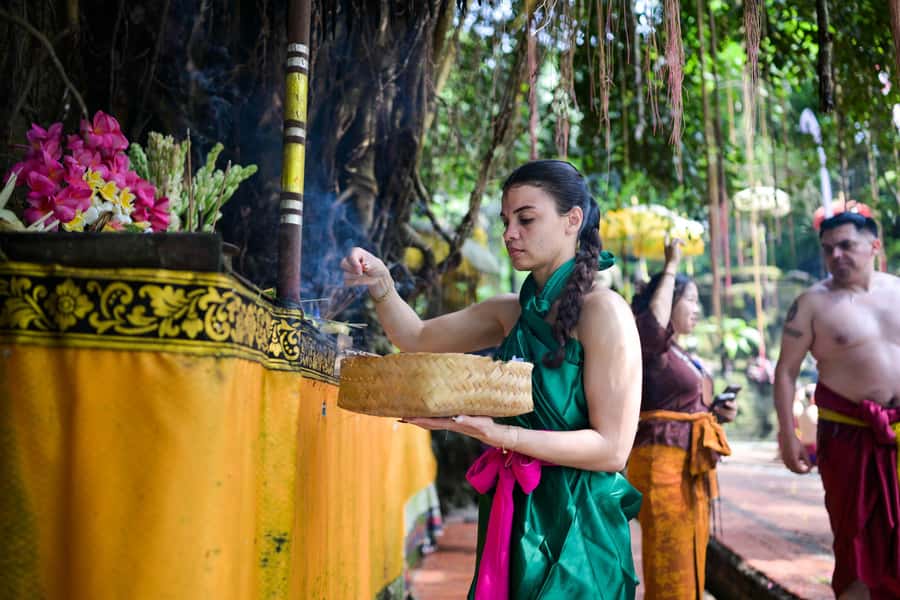
- The ritual uses several holy-water immersions to support prayer, reflection, and spiritual cleansing.
- Taman Beji Griya is both a waterfall and sacred site, so the natural setting is part of the ceremony.
- A local guide explains the offerings, prayers, gods, and guardians rather than leaving you to guess what to do.
- Early morning visits can feel especially peaceful, with less waiting and fewer people around.
- Sarong, towel, locker, offerings, and ritual equipment are included, which keeps the preparation simple.
- Hotel pickup is available across much of southern Bali, though shared transport adds time and limits privacy.
Arriving at Taman Beji Griya Waterfall
You can meet at Taman Beji Griya Waterfall or choose hotel pickup and drop-off. Transfer coverage includes Ubud, Uluwatu, Nusa Dua, Jimbaran, Kuta, Seminyak, Canggu, Sanur, Denpasar, Candidasa, and Kintamani.
If you choose transport, expect a shared vehicle with other participants. Your pickup time follows the start time you select, and the exact details are reconfirmed through WhatsApp before the activity. That communication matters in Bali, where traffic can turn a short drive into a slow one.
The total experience can last from one to six hours, depending on your chosen option and pickup point. The time at the waterfall is listed at about one and a half hours, but some people find the full visit takes longer. Give yourself room in your day instead of placing it between two tightly scheduled activities.
Drivers are a strong part of the experience. Udi has helped explain local customs and offered restaurant suggestions. Wayan Sue has shared information about ceremonies and Balinese life, and some participants have enjoyed extra stops or a fresh coconut on the return drive. Those extras are not guaranteed, but a good driver can make the ride feel like part of the cultural visit rather than a simple transfer.
A few more waterfall trips around Ubud worth a look
- Ubud: Waterfalls, Water Temple & Rice Terraces Private Tour
★ 5.0 · 5,484 reviews - Best of Bali Waterfalls: Tibumana, Tukad Cepung and Tegenungan
★ 5.0 · 3,047 reviews - Ubud: Full-Day Rice Terrace, Monkey Forest & Waterfall
★ 5.0 · 2,634 reviews
Preparing for the Melukat ceremony
On arrival, a local spiritual guide welcomes you and explains the basic process. You receive a sarong, and prayer equipment and offerings are supplied. Private lockers with keys, towels, and changing facilities are also available.
Wear comfortable clothing and bring swimwear, a change of clothes, and a towel if you prefer your own. Swimwear under the provided sarong is the sensible choice. You will get wet, and changing afterward is part of the normal flow.
The site follows local religious customs, so modest dress and quiet behavior matter. Smoking, alcohol, drugs, fireworks, and flash photography are not allowed. You should also avoid loud talking, inappropriate behavior, and littering. This is not a pool visit with a religious backdrop. The waterfall is an active sacred place, and your attitude affects the experience for everyone around you.
One important cultural rule is that people who are menstruating may not enter Taman Beji. This is a traditional practice at the site. It is best to treat that rule as a firm condition of entry and plan accordingly.
The activity is not suitable for pregnant women, people with back or heart problems, people with mobility impairments, wheelchair users, or anyone over 70. The ritual involves walking and entering water, so you should take the physical requirements seriously.
What happens during the water purification
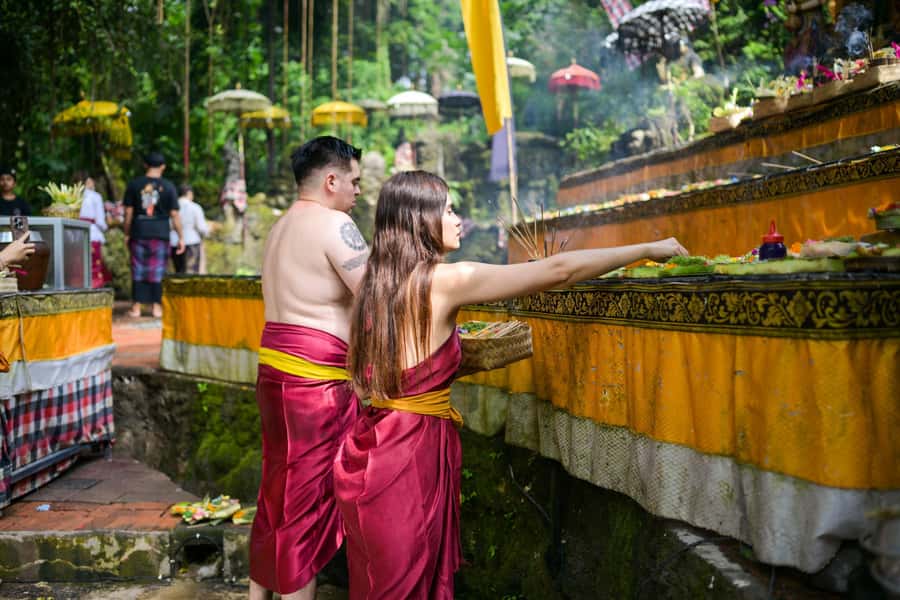
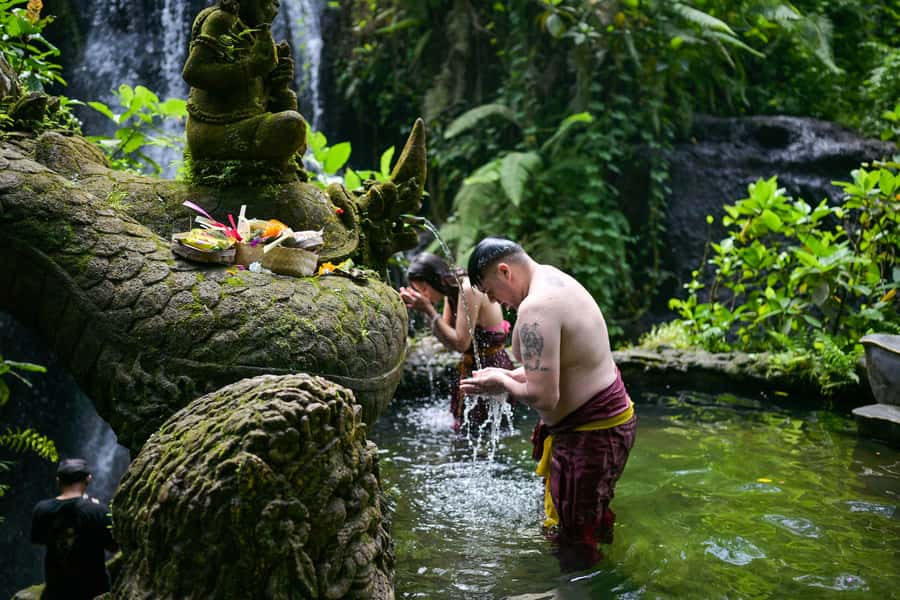
The Melukat ceremony involves prayer, offerings, and a series of holy-water immersions. Your guide leads you through each stage and shows you how to use the flowers and other ritual items.
You are not expected to know Balinese prayers or religious gestures beforehand. The guide explains what to do at each point, including which gods or guardians are being honored. Putu Adi, Bayu, Dodo, Nanda, and other local guides have been praised for giving clear instructions and allowing people to move at a comfortable pace.
The water is used for ritual purposes only and is not recommended for drinking. That may sound obvious, but it is worth remembering when you are surrounded by flowing water and offered a traditional drink afterward.
The physical part of the ceremony is simple but can feel powerful. You move through the cleansing process, stand beneath or near the falling water, pray, and take time to let go of thoughts or emotions that have been weighing on you. The water is cold and the setting is dramatic, so you may laugh, gasp, or even shout. One participant described being surprised by how much they reacted during the water stages.
I would approach the ceremony with respect rather than treating it as a guaranteed cure for stress or sadness. The value comes from the pause, the symbolism, and the chance to focus your thoughts. If you take part only for photographs, you may miss the best part. If you allow yourself to slow down, the ritual can feel personal even though other people may be present.
The waterfall setting and the pace of the visit
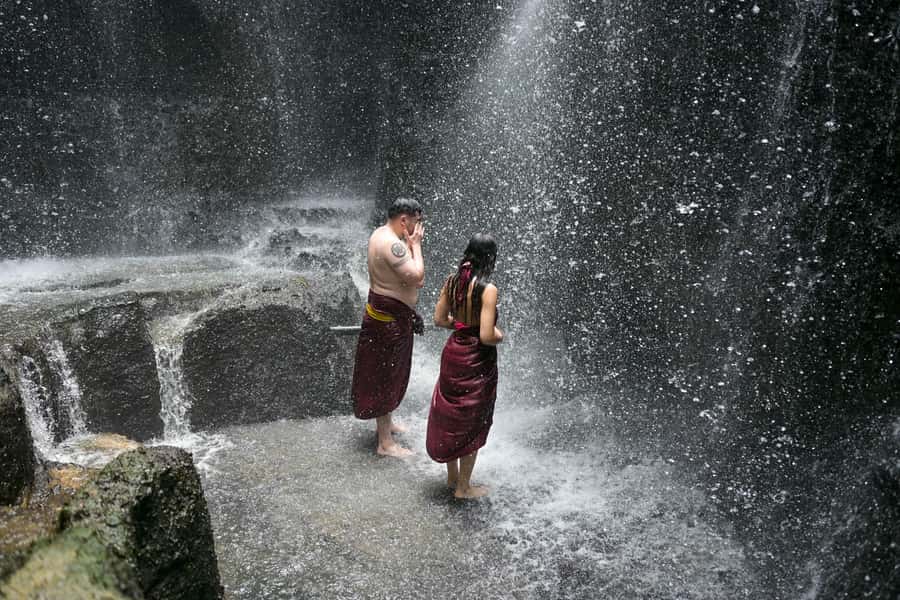
Taman Beji Griya combines forest, rock, flowing water, and sacred structures. The waterfall gives the ceremony a strong sense of place, and the surrounding setting is far more memorable than a plain indoor blessing.
This is also a working attraction that receives many people. You may see other participants moving through the ritual, particularly later in the day or during popular periods. The staff use a clear process to keep things moving, which helps prevent confusion but can make the experience feel less private.
For a quieter visit, choose an early start if possible. One person who took a morning slot arrived first and found the ceremony especially calm. Another visit in the middle of a weekday afternoon had almost no waiting. These are useful clues, but timing cannot guarantee an empty site.
The ceremony itself can still feel peaceful with other people nearby. Guides generally stay with you, explain what is happening, and help you find your way around the waterfall. Several guides also take photographs or videos during the visit, although you should confirm what is included in your booking. Professional photography and Polaroid services are available as optional add-ons.
Same trip, a different kind of day out:
- ATV Quad Bike Through Tunnel and Waterfall in Bali
★ 5.0 · 2,098 reviews - ATV Quad Bike Bali with Waterfall Gorilla Cave and Lunch
★ 5.0 · 1,925 reviews - Ubud: Quad ATV Waterfalls & Barong Caves
★ 4.7 · 891 reviews - Bali ATV Quad Bike Through Tunnel, Waterfall, White Water Rafting
★ 5.0 · 610 reviews
Photography without losing the moment
The setting is naturally photogenic, and photographs can help you remember the ritual. Some guides have taken thoughtful pictures and videos during the ceremony, and several participants were pleased with the results. An add-on photographer is available if you want more polished images.
There is a tradeoff. Stopping for photos can pull your attention away from prayer and reflection. Flash photography is prohibited, and the religious setting calls for discretion. If you want images, tell your guide early and ask for a respectful approach.
I would decide before you arrive how much photography you want. A few quiet photos at the right moments may be enough. If you want a full set of portraits, choose the optional photography service, but do not expect the ceremony to feel entirely private.
The herbal drink after the ritual
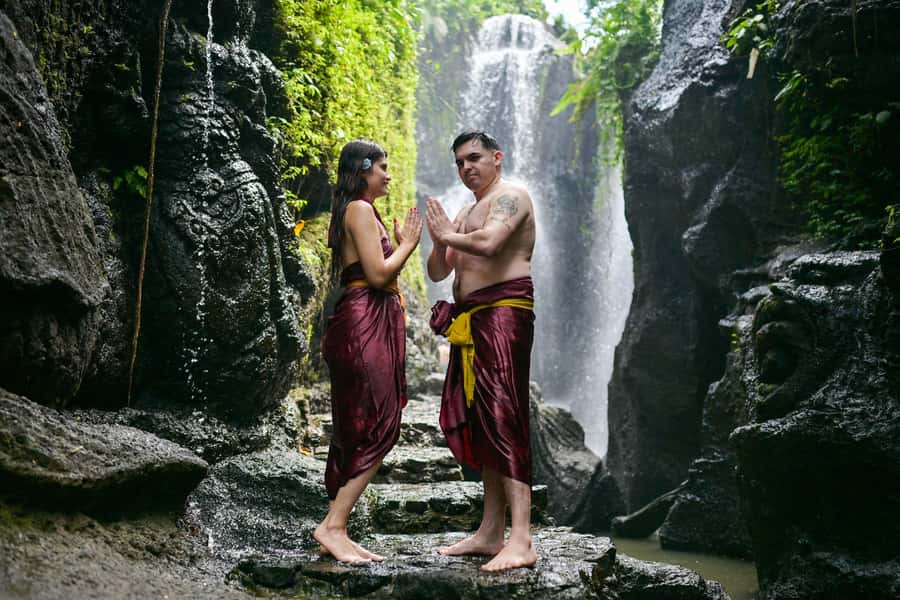
After the water stages, you change and receive a traditional jamu herbal drink. Jamu is part of Indonesian wellness culture, and the drink gives you a gentle finish after the ceremony.
The provided information does not specify the exact ingredients, so you should ask if you have allergies or strong preferences. Some people have also received ginger or cinnamon drinks, and a few drivers have offered coconut water during the return journey, but those extras can vary.
This closing drink is more than a free refreshment. It gives you a moment to sit with the experience before returning to the vehicle, changing back into dry clothes, and heading to your hotel.
Is $29 a fair price?
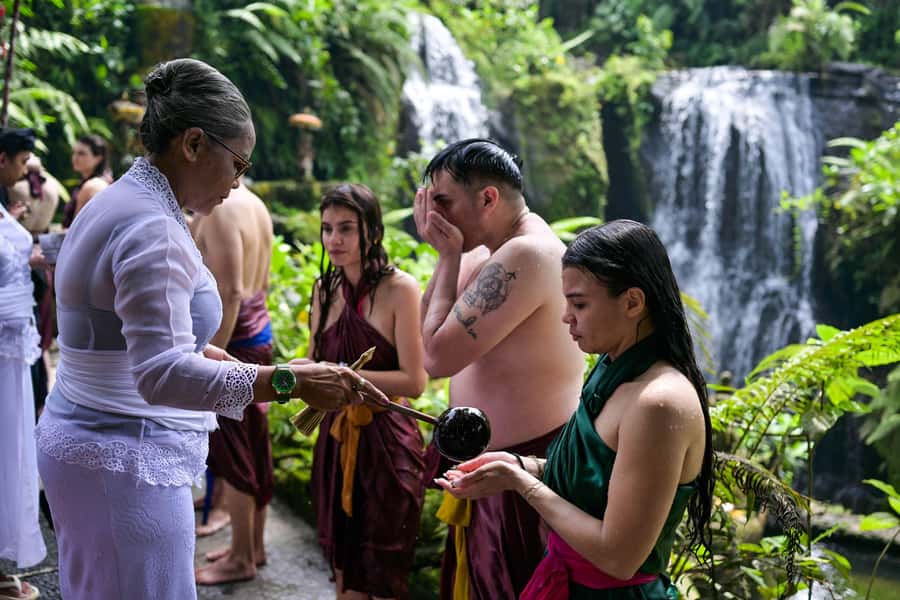
At $29 per person, this is not the cheapest way to visit a Bali waterfall. A simple waterfall stop may cost less, particularly if you arrange your own transport.
The value here comes from the complete setup. Your price includes admission, a local guide, holy water, offerings, prayer equipment, a sarong, towel, private locker, parking, and jamu. Hotel transport is included only when you select the transfer option, and food, personal expenses, and optional photography cost extra.
I think the price is fair if you want a guided cultural ritual and easy preparation. You do not need to source a sarong, find the correct offerings, or work out the order of the ceremony yourself. The guide and organized arrival also make the visit more comfortable for a first-time visitor to Bali.
The value is weaker if you mainly want to swim, take pictures, or see a waterfall quickly. In that case, you may feel you are paying for a spiritual program you do not intend to use. This activity suits someone who is willing to participate respectfully, not someone looking for a casual water stop.
Shared transport, timing, and practical tradeoffs
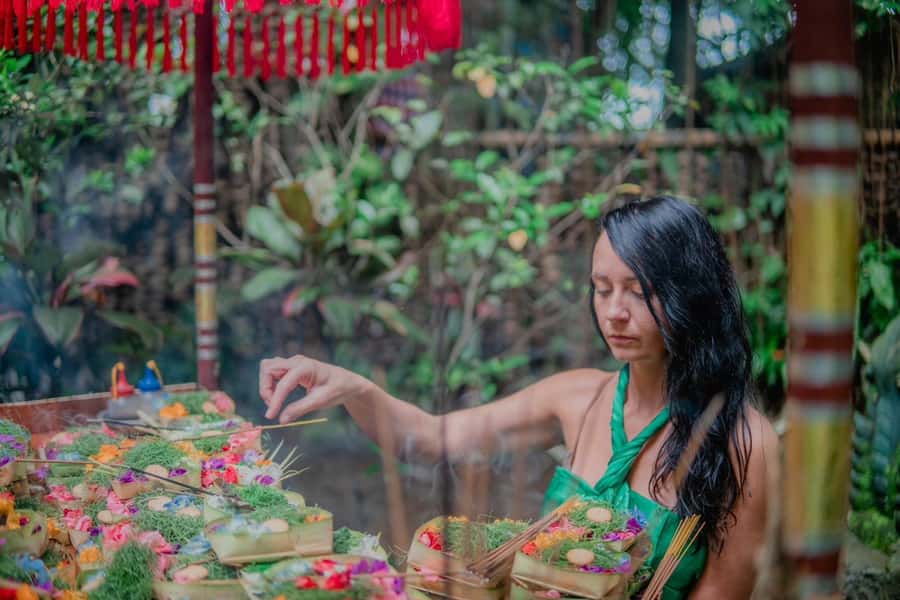
Hotel transfer is useful if you are staying far from the site or do not want to arrange a driver. The service covers a wide area, and drivers are often praised for arriving on time, communicating clearly, and driving carefully.
The downside is that transfers are shared. You may wait for other participants, and a long pickup route can make the day less direct. Traffic around Bali can also affect the schedule. If you are staying nearby, meeting at the waterfall may give you more control.
Drop-off options include Ubud, Taman Beji Griya, and other covered locations depending on the option selected. Confirm your pickup and return details through WhatsApp before the activity, especially if you are traveling from a distant area.
The English-language guiding is designed for international participants. You should still feel free to ask questions about the offerings, prayer steps, and the meaning of the water. The best part of the visit is often the explanation around the ritual, not simply the water itself.
Who will enjoy this most?
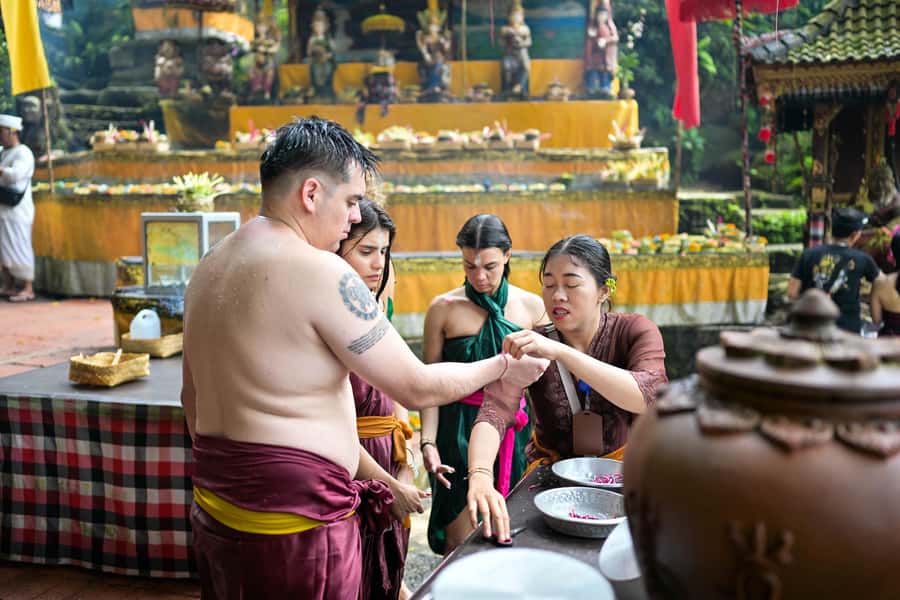
I would recommend Taman Beji Griya to you if you want a thoughtful cultural experience, enjoy spiritual traditions, or need a quiet pause during a busy Bali trip. It can suit solo visitors as well as couples, and solo participants have described feeling comfortable with the guide and driver support.
It is especially good for anyone who wants to learn about Balinese Hindu customs in a real setting. You do not need to follow the religion to take part respectfully. You do need to accept that this is a religious ceremony, not a performance created only for sightseeing.
You may want to skip it if you dislike getting wet, prefer complete privacy, have difficulty walking or entering water, or do not want to follow local rules. The age and health restrictions are clear, and you should not ignore them because the setting looks peaceful.
The activity has a 4.8 rating from 634 bookings, with particularly strong praise for the drivers, the local guides, the clear organization, and the emotional effect of the ceremony. That pattern makes sense. The waterfall is beautiful, but the human guidance is what turns the visit into something more meaningful.
Should you book Taman Beji Griya?
Book it if you want more than a scenic stop and are ready to approach Balinese purification with respect. The strongest reasons are the setting, the careful guidance, the included ritual supplies, and the chance to slow down for an hour or two.
Choose an early morning time if peace and fewer people matter to you. Select hotel transport if convenience is worth sharing a vehicle, and consider photography only after deciding how much you want the camera involved.
At $29, it is a good-value cultural experience rather than a bargain waterfall tour. I would recommend it to you if the ceremony itself interests you. If you only want water, scenery, and a quick outing, spend your money elsewhere.
FAQ
How long does the Taman Beji Griya experience take?
The available duration ranges from one to six hours, depending on the selected option and transport arrangements. The visit at Taman Beji Griya Waterfall is listed at about one and a half hours.
What does the $29 price include?
The price includes the Melukat ritual, local guide, holy water, prayer equipment, offerings, admission, sarong, private locker with key, towel, jamu herbal drink, and parking. Hotel transfer is included only if you select a transfer option.
Do I need to bring swimwear?
Yes. Swimwear is recommended under the provided sarong. You should also bring comfortable clothes and a change of clothes.
Can I take photographs during the ritual?
Flash photography is not allowed. Optional Polaroid and professional photography services are available, and some guides may help take photos or videos during the visit.
Can I drink the holy water?
No. The holy water is for ritual use only and is not recommended for drinking.
Who should not take part?
The activity is not suitable for pregnant women, people with back, heart, or mobility problems, wheelchair users, or people over 70. People who are menstruating are not permitted to enter Taman Beji because of traditional practices.
Just added around Ubud
- Quad Bike Bali With Tunnel & Waterfall Tour★ 4.2 · 8 reviews
- Monkey Forest, Kanto Lampo, Waterfall, Temple & Rice Terrace★ 4.9 · 14 reviews
- Ubud: Water Temple, Rice Terrace, and Waterfalls Tour★ 5.0 · 5 reviews
- From Bali: Saraswati Temple, Monkey Forest, Ubud Waterfalls★ 4.9 · 263 reviews
- Explore rice terraces munduk & waterfall trekking experience★ 4.9 · 7 reviews
- Bali: Ubud Monkey Forest, Waterfall, and Rice Terrace Tour★ 5.0 · 11 reviews
- Best Of Ubud Purification Rice Terrace and Waterfall★ 4.7 · 7 reviews
- Bali Waterfalls Private Day Tour★ 4.5 · 11 reviews
Ubud Waterfall Tours, compared.
Waterfalls, Water Temple & Rice Terraces Private Tour
Read our review →
Best of Bali Waterfalls: Tibumana, Tukad Cepung and Tegenungan
Read our review →
Full-Day Rice Terrace, Monkey Forest & Waterfall
Read our review →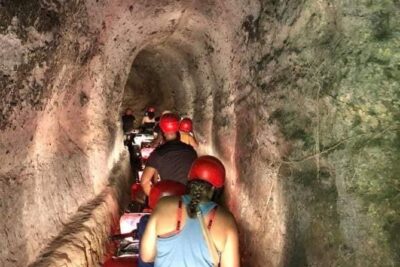
ATV Quad Bike Through Tunnel and Waterfall in Bali
Read our review →
ATV Quad Bike Bali with Waterfall Gorilla Cave and Lunch
Read our review →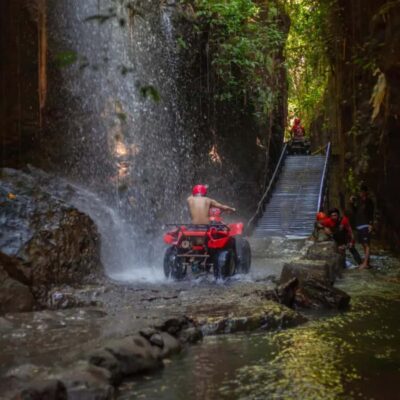
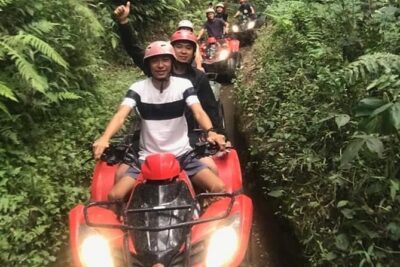
Bali ATV Quad Bike Through Tunnel, Waterfall, White Water Rafting
Read our review →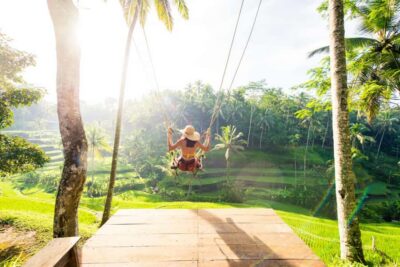
Gorilla Face Quad Bike, Jungle Swing, Waterfall & Meal
Read our review →Browse the lists this tour appears in